Is Indian Food Healthy? What to Order (and What to Skip)
Quick answer: Indian food can be one of the lighter cuisines to order or one of the heaviest — it depends on the sauce, the bread, and the portions. Dry tandoori or tikka dishes, plain dal, and a single roti keep a meal moderate, while cream-based curries with naan and rice can pass 1,000 calories without looking like a large meal.
So, is Indian food healthy? The cuisine itself has a lot going for it, but what ends up on the table at a restaurant is often richer than what most people cook at home.
This guide explains what makes some Indian dishes light and others heavy, which dishes to choose, how to get enough protein, and how to order without letting the calories add up unnoticed.
Is Indian Food Healthy? The Short Answer
Traditional Indian cooking is built around lentils, chickpeas, vegetables, yogurt, and spices, and many dishes are grilled or tomato-based rather than heavy with cream. That foundation can make for a very balanced meal.
The trouble is how restaurant menus are usually ordered. Several rich curries, bread, and rice arrive together, and each dish may be made with more cream, butter, or oil than a home version. So the honest answer is: Indian food isn’t automatically healthy or unhealthy — the choices within it are what matter. If you’re also comparing other cuisines, our guide to Thai food and calories works the same way.
What Makes Indian Food Heavy: The Most Common Mistakes
- Ordering three or four dishes “for variety” and eating some of each. One creamy curry, dal makhani, naan, and rice can easily pass 1,200 calories.
- Assuming “vegetarian” means light. Paneer butter masala and dal makhani often contain a lot of cream, butter, and oil.
- Taking naan “just for dipping.” A single piece is usually around 260-300 calories, and butter or garlic naan has more.
- Choosing fried starters or creamy sauces over baked and tandoori options. Pakoras, samosas, and creamy sauces add calories quickly.
- Assuming paneer is a high-protein choice. In many restaurant dishes there is little cheese and a lot of sauce.
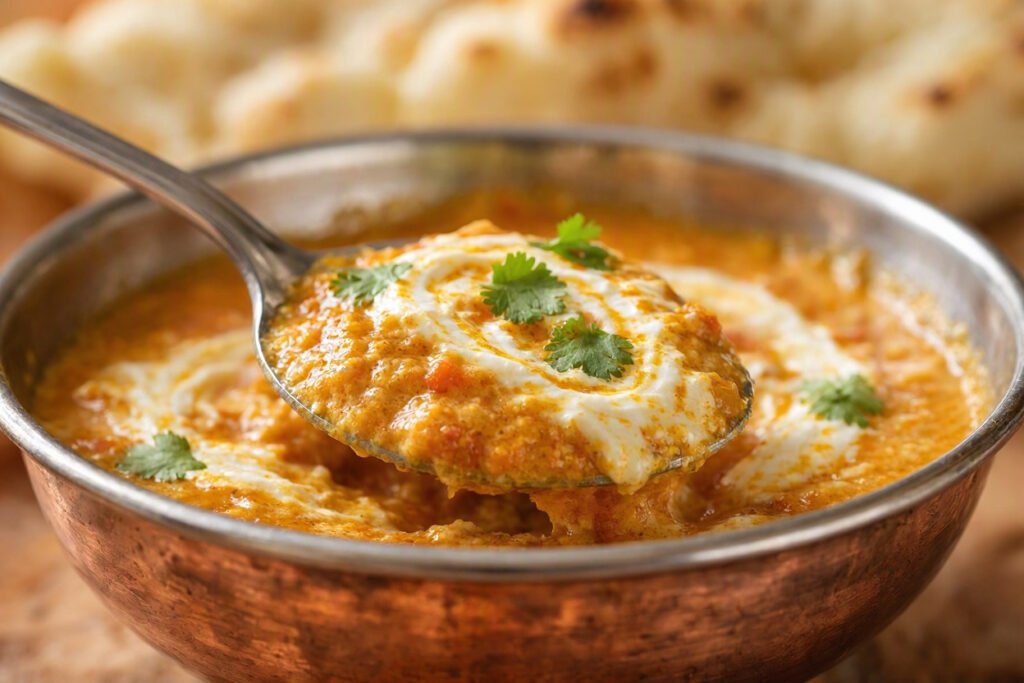
Cream, butter, and ghee raise the calorie count significantly without making the meal more filling, and restaurant portions of sauce tend to be larger and richer than home versions.
Calories in Common Indian Items
These are approximate figures for typical restaurant servings. Calories vary by restaurant, so treat them as a guide.
| Item | Typical Serving | Calories |
|---|---|---|
| Tandoori chicken or chicken tikka | about 150g | 220-290 |
| Naan | 1 piece | 260-300 (more for butter or garlic naan) |
| Roti | 1 piece | about 100-120 |
| Basmati rice | 1 cup, cooked | about 200 |
What I Tell Clients
The most common mistake I see at Indian restaurants is ordering too many creamy sauces and too much bread. Butter chicken, paneer masala, dal makhani, and naan add up quickly, even though the meal looks perfectly normal on the table.
For protein, my usual pick is dry tandoori or tikka. Dal is a good plant-based addition, and paneer only counts as a protein source if it is genuinely the main ingredient, not the sauce.
— Chloe MacAllister, Certified Sports Nutritionist
The Best Protein Choices at an Indian Restaurant
| Option | Why | How to use it |
|---|---|---|
| Tandoori chicken or chicken tikka | The best protein-to-calorie ratio. It’s baked, without a heavy sauce: roughly 220-290 calories and around 30 g of protein or more per 150g. | First choice if you eat meat. |
| Dal | Good plant protein and fiber. Plain dal tadka is lighter than dal makhani. | Take it as a side, not as the only protein dish. |
| Paneer | Can be a good protein, but in restaurants it is often sitting in a rich sauce. | Choose dry paneer tikka, not paneer butter masala. |
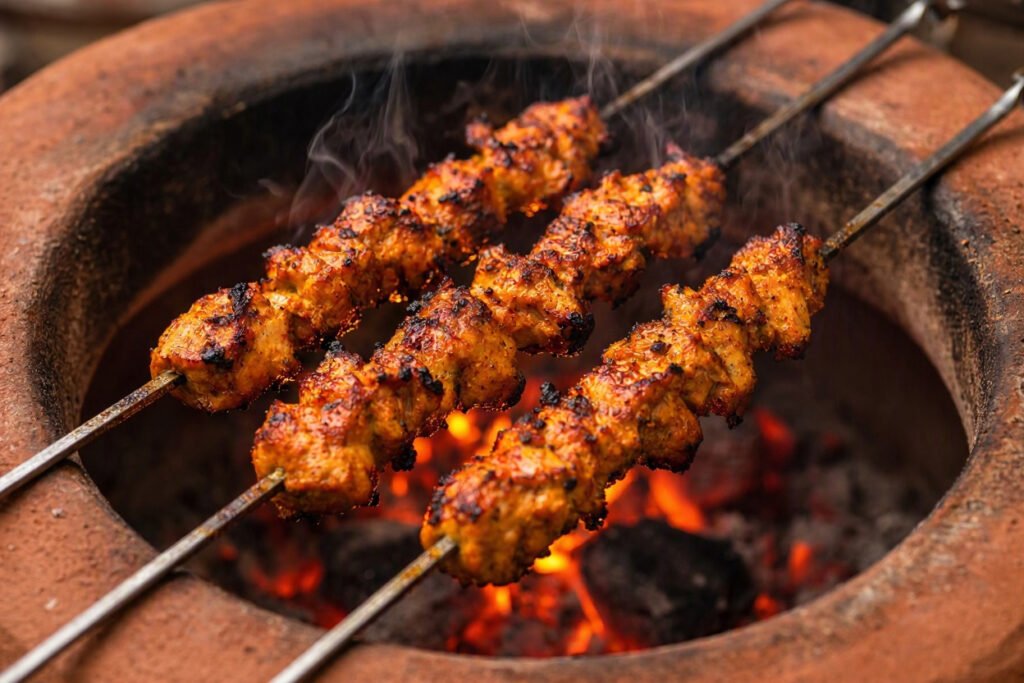
If you want the most protein for the fewest calories, order tandoori chicken or dry chicken tikka. If you’re vegetarian, dry paneer tikka plus dal tadka is a better combination than paneer in a creamy sauce.
Healthy Vegetarian Options at an Indian Restaurant
Vegetarian dishes can be some of the best choices on an Indian menu, but they’re not all equal. Lighter options usually include:
- Chana masala — chickpeas in a tomato-and-onion sauce.
- Dal tadka — a plain lentil dish, lighter than dal makhani.
- Dry paneer tikka — grilled cheese with spices, no heavy sauce.
- Tandoori vegetables — vegetables cooked in the clay oven.
- Raita and a cucumber salad as cooling sides.
Check before ordering saag or palak paneer, korma, and malai kofta, which can be made with cream, and dishes like baingan bharta or aloo gobi, which can be cooked in a fair amount of oil. Asking how a dish is prepared takes a few seconds and helps you choose.
How to Order Indian Food Without Overdoing It
Choose:
- Dry tandoori chicken, chicken tikka, or grilled fish as the main protein.
- Dal tadka or plain dal, and ask for less oil or butter. It’s a better pick than dal makhani.
- One sauce at most, preferably tomato-based rather than cream or butter-based.
- A salad, a small portion of raita, or roasted vegetables on the side.
- One bread, decided in advance. Roti is usually a better choice than naan.
Avoid or limit:
- Butter chicken, paneer butter masala, korma, malai kofta, and similar creamy curries if you want to keep calories in check.
- Dal makhani. It’s delicious, but the restaurant version often contains considerably more butter and cream than plain dal.
- Naan, especially butter or garlic naan. If you have it, make it one piece.
- Fried starters, sweet drinks, and dessert as a standard part of the meal.
Does the Regional Cuisine Matter?
India’s regional cuisines differ a lot. Many Indian restaurants outside India focus on North Indian dishes: tandoori grills, creamy gravies, and breads like naan. Menus that include South Indian food add dishes such as idli (steamed rice and lentil cakes), dosa (thin fermented crepes), and sambar (a vegetable and lentil stew), which are often lighter than cream-based curries.
Neither region is automatically healthier. A dosa stuffed with potato and served with ghee, or a coconut-based fish curry, can be rich, while a dry tandoori dish from the North is one of the leanest things on the menu. As with any cuisine, the cooking method and the sauce matter more than the region, and it’s always fine to ask how a dish is made.
Drinks and Desserts
Sweet drinks and desserts are an easy place for calories to creep in because they come on top of a full meal. A mango or sweet lassi is made with sugar and often a generous amount of yogurt, and desserts like gulab jamun or kheer are built on sugar and dairy. If you want something sweet, sharing one dessert is a simple way to keep the total down, and water, unsweetened tea, or a salted lassi are lighter drinks.
A Smart Meal vs. a Heavier Meal
| Meal | What’s on the table | Estimate |
|---|---|---|
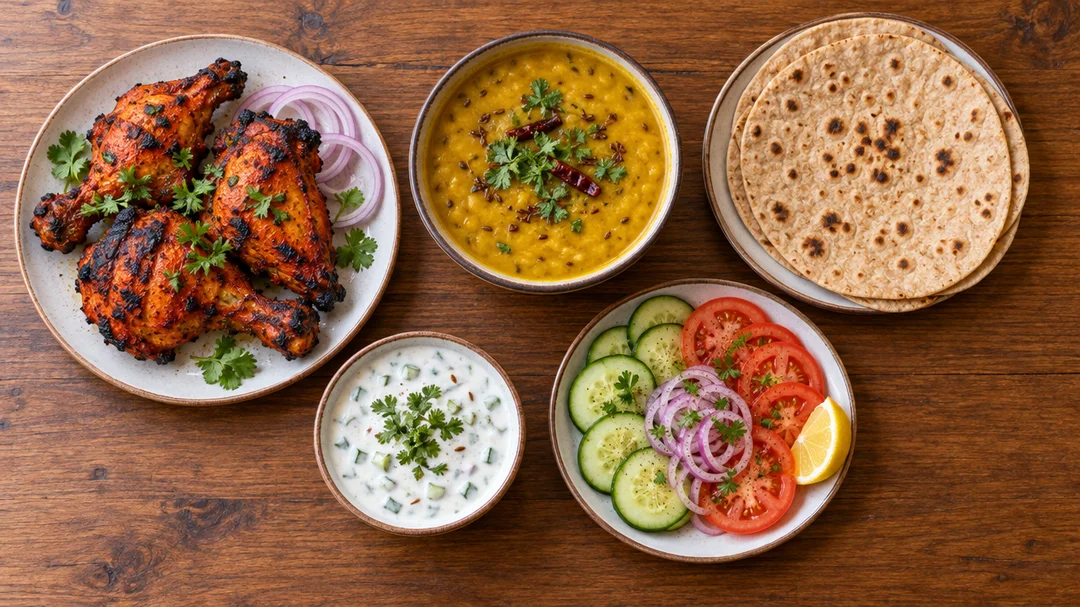
| Smart meal | Tandoori chicken, dal tadka, one roti, salad | roughly 600-750 calories, with about 40-50 g of protein |
| Heavier meal | Butter chicken, dal makhani, butter naan | can easily reach 1,000-1,400 calories, depending on portions |
Butter chicken with naan and rice alone can reach roughly 860 calories or more, and a meal that looks reasonable can still be a heavy one. The difference is rarely one dish, it’s the sauce, the bread, and the portions together.
The Health Side of Indian Food
So, is Indian food healthy for everyday eating? Lentils and chickpeas provide plant protein and fiber, and vegetable-based dishes and yogurt sides are a natural part of the cuisine. Turmeric’s active compound, curcumin, is often credited with health benefits, but the National Center for Complementary and Integrative Health says we don’t yet know enough to conclude that turmeric or curcumin helps for any health purpose, so it’s best enjoyed as a flavor rather than a health fix.
Frequently Asked Questions
What is the healthiest Indian food to order?
Tandoori chicken or chicken tikka (or dry paneer tikka if you’re vegetarian), plain dal tadka, a salad, and one roti make a balanced, protein-rich meal without a heavy sauce.
What is the unhealthiest Indian dish?
There is no single worst dish, but creamy curries like butter chicken, paneer butter masala, korma, and malai kofta, along with dal makhani, butter naan, and fried starters, tend to add the most calories because of cream, butter, ghee, oil, and large portions.
Is naan or roti healthier?
Roti is usually the lighter choice. A single naan is typically around 260-300 calories, and butter or garlic naan has more, so if you have naan, make it one piece.
Is Indian food good for weight loss?
It can fit into a weight-management plan if you choose tandoori or tikka dishes, plain dal, and tomato-based sauces, keep to one bread, and limit cream-based curries and fried starters.
Is Indian food high in protein?
It can be, especially with tandoori chicken, chicken tikka, dal, and dry paneer tikka. Paneer in a rich sauce often delivers less protein than you’d expect because most of the dish is the sauce.
Which Indian cuisine is the healthiest?
No single regional cuisine is the healthiest. South Indian dishes such as idli, dosa, and sambar are often lighter than cream-based North Indian curries, but tandoori dishes from the North are lean too, and coconut-based curries can be rich. The cooking method and the sauce matter more than the region.
Are vegetarian Indian dishes healthy?
They can be, but not automatically. Chana masala, dal tadka, and dry paneer tikka are lighter picks, while creamy dishes like paneer butter masala, korma, and malai kofta can be as rich as meat curries.
The Bottom Line
Is Indian food healthy? It can be. The cuisine gives you lentils, vegetables, yogurt, and grilled proteins, and it also gives you cream-based curries, naan, and fried starters on the same menu. Choose one tomato-based or dry dish, add dal, decide on one bread in advance, and Indian food fits comfortably into a balanced diet without giving up the flavor. For a full week of balanced meals, see our healthy diet plan to lose weight.
This article is general information, not personal medical or dietary advice. If you have a medical condition or follow a medically prescribed diet, talk to your doctor or a registered dietitian.