
How I Lost Over 60 Pounds: A Heart Attack at 20 Was My Wake-Up Call
This is how I lost 60 pounds (66 lbs, to be exact, or 30 kg), and why it took a heart attack at 20 to finally make it stick. For years, I searched for a way to lose weight healthily while dealing with multiple health problems. I didn’t just want to lose weight — I wanted to feel stronger, healthier, and more confident in my own body.
I struggled with blood sugar problems, multiple allergies, and an immune system that seemed to take vacations whenever it felt like it. Honestly, I don’t remember being completely healthy for more than four weeks in a row.
Despite these health struggles, I was extremely sensitive about my weight. It felt like everyone had an opinion. My mother would often say, “So what are you so worried about?” Yet she never took me to her crochet club. Apparently, introducing her overweight, constantly sneezing daughter required more explanation than she was willing to give.
Michelle’s story, as told to Trudy Banks. Nutrition information reviewed by Chloe MacAllister, Certified Sports Nutritionist.
Michelle at a Glance
- Height: 5’9″ (175 cm)
- Heaviest weight (age 20): 212 lbs (96 kg)
- Weight today: 146 lbs (66 kg), which is 66 lbs (30 kg) less
- First 8 months: about 44 lbs (20 kg) lost
- Total time: almost 2 years to reach 146 lbs (66 kg)
- Turning point: a mild heart attack at 20, after years of yo-yo dieting
Key Takeaways
- Michelle was overweight her whole life and yo-yo dieted for years before a heart attack at 20.
- Comparing herself with a friend’s faster results cost her a friendship and her motivation.
- The heart attack brought that friend, Megan, back into her life and started the approach that finally worked.
- Her results came from habits she could repeat: balanced meals, water, sleep, Sunday meal prep, light exercise and a support group.
- About 44 lbs (20 kg) came off in the first 8 months; reaching 146 lbs (66 kg) took almost two years.
My First Attempt at Losing Weight
I had been chubby my entire life. In high school, I had a close friend named Megan who was plump like me, and we both endured years of teasing and judgment. When we were about fifteen, we decided to start a healthy weight loss plan together.
We joined a gym full of enthusiasm and determination. We promised to weigh ourselves after one month. The results were devastating.
Megan lost fifteen pounds. I lost one. How was that possible? We started at almost identical weights. If anything, I weighed slightly less at the beginning.
The second month brought similar results. Megan lost another fifteen pounds while my progress moved slower than dial-up internet. My frustration turned into resentment. I even accused Megan of cheating by secretly eating less or exercising more.
By the third weigh-in, Megan continued losing weight while I gained some back. That moment destroyed our friendship. Looking back, I regret how I reacted, but at the time I felt defeated and embarrassed.
Losing Motivation and Giving Up
After Megan and I stopped going to the gym together, my motivation disappeared faster than free samples at a supermarket. I kept promising myself I would restart my diet “tomorrow,” “Monday,” or the famous “first day of next month.”
Years passed. I kept trying, and it kept failing. I lost some weight, then gained it back, then lost it again, like a human yo-yo. Whenever I relaxed my guard, the scale won. My belly became my most noticeable feature — often arriving in a room before the rest of me.
I desperately searched for sustainable weight loss methods and tried nearly every diet trend available. I wanted a plan that felt realistic, flexible, and sustainable rather than another temporary diet. Each failure felt heavier than the last.
I knew the basic healthy eating rules: cut back on sugar, excess salt, unhealthy fats and processed carbohydrates, and eat more fruits, vegetables, fiber-rich foods and lean proteins.
And of course… exercise. That mysterious activity that always seemed scheduled for tomorrow.
Eventually, I became overwhelmed and socially withdrawn. I left the house only when necessary — usually for groceries or occasional guilt-driven junk food runs. I convinced myself that following a healthy diet simply wasn’t possible for me.
If this sounds familiar, our guide to getting back on track when you lose motivation has seven practical ideas.
The Wake-Up Call That Changed My Life
Then reality hit hard. During one of those “relaxing” periods, when I had stopped trying again, I suffered a mild heart attack. I was just twenty years old, and at 212 lbs (96 kg) I was the heaviest I had ever been.
Yes. Twenty.
While recovering in bed, I realized how much my unhealthy lifestyle had cost me. I had lost friendships, confidence, and most importantly, control over my own health.
My daily routine consisted mainly of watching movies and promising myself that I would “change soon.”
My body clearly decided it had waited long enough.
Megan’s Return and the Metabolism Conversation
One afternoon, my doorbell rang. When I opened it, I saw a confident, fit woman smiling at me. It took a moment to recognize her. It was Megan.
She had heard about my heart attack and wanted to check on me. I was shocked by her transformation. She looked energetic, healthy, and genuinely happy. Naturally, I felt jealous — not in a dramatic villain way, but in a quiet, hopeful way.
Looking back, I know that without the heart attack, Megan would never have rung my doorbell, and I would probably still be restarting my diet “on Monday.”
Megan told me she had struggled too, and that what finally worked for her was changing her routine in small, repeatable steps instead of starting another strict diet.
My Obsession With Metabolism (And Brief Sumo Career Consideration)
The moment Megan left, I rushed to my computer — not Olympic sprint speed, but significantly faster than my usual “eventually I’ll get there” pace. I started reading about how metabolism and weight loss actually work. Then my brain produced what I believed was a brilliant thought: what about sumo wrestlers? Could professional sumo wrestling secretly be my life calling?
Thankfully, logic returned shortly afterward, and I decided to focus on realistic habits instead. What I struggled with most was staying consistent.
Building a Routine I Could Keep
After the heart attack, my doctor gave me a list of foods I was allowed to eat while I recovered, and I went back for a check-up after six months. The rest I worked out myself, so I’m sharing it as my experience, not as medical advice. This time I didn’t look for a shortcut, and I didn’t try to change everything at once. I focused on:
- Balanced, nutrient-rich meals
- Drinking more water
- Reducing processed sugars
- Adding light daily exercise
Surprisingly, I began losing weight steadily and consistently. Most of it came off in those first eight months: about 44 lbs (20 kg).
How I Lost 60 Pounds: What I Actually Changed
I stopped chasing quick fixes and drastic diets. Instead, I committed to sustainable habits:
- A new mindset: I stopped weighing myself every day and focused on how I felt — my energy, my mood and my strength.
- Sleep: I made 7–8 hours a night a priority because, in my experience, poor sleep sabotaged my metabolism and made my cravings worse.
- Hydration: I drank 2–3 liters (about 8–12 cups) of water a day, which helped me stop unnecessary snacking.
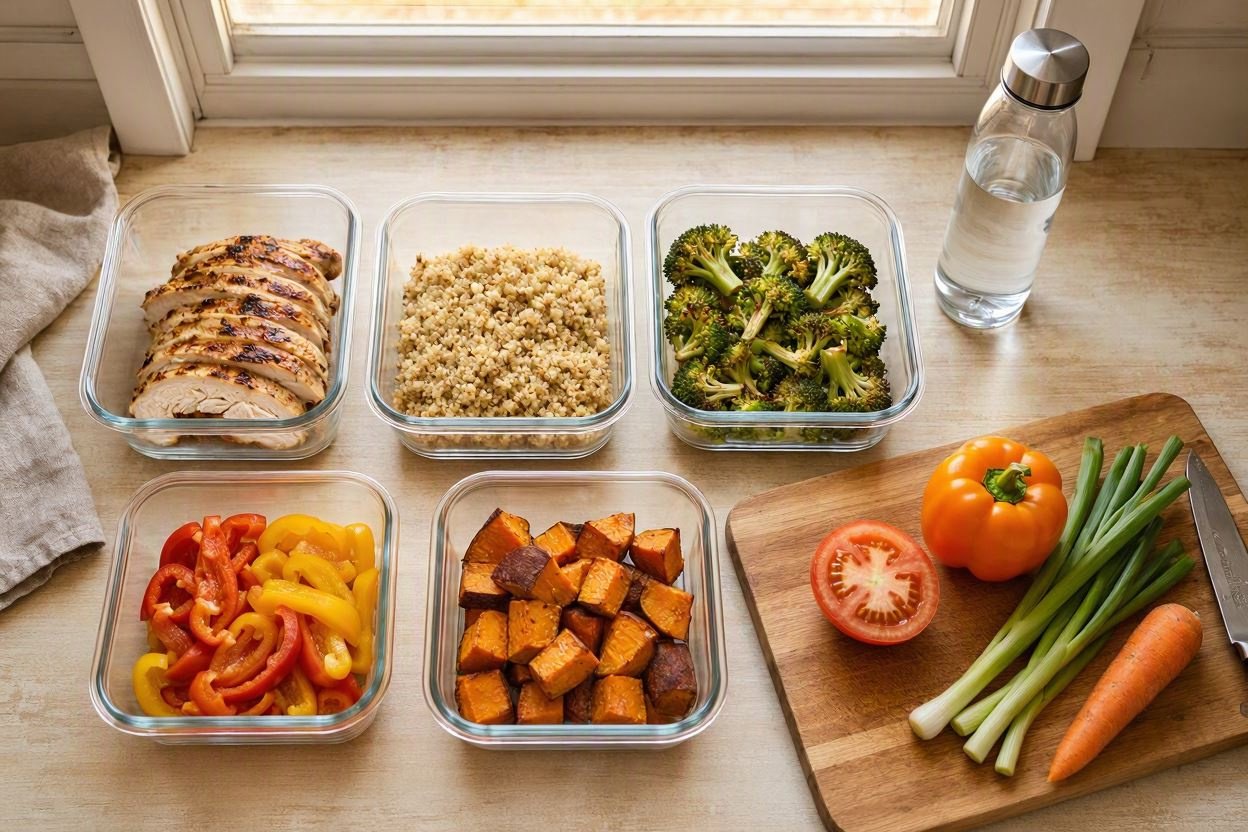
- Meal prep: I dedicated Sundays to planning and prepping my meals, so I wouldn’t reach for takeout when I was exhausted.
- Accountability: I joined a small online support group where we shared our progress every week, including the wins that had nothing to do with the scale.
What I Ate
A typical day during my first eight months:
Breakfast
- Option 1: unsweetened Greek yogurt with a handful of berries, a spoonful of chia seeds and a few almonds.
- Option 2: a two-egg scramble with spinach and cherry tomatoes, plus a slice of whole-grain toast.
- Coffee: black, or with a splash of almond milk.
Mid-morning snack
An apple, a banana, or a handful of raw nuts (almonds, walnuts or hazelnuts).
Lunch
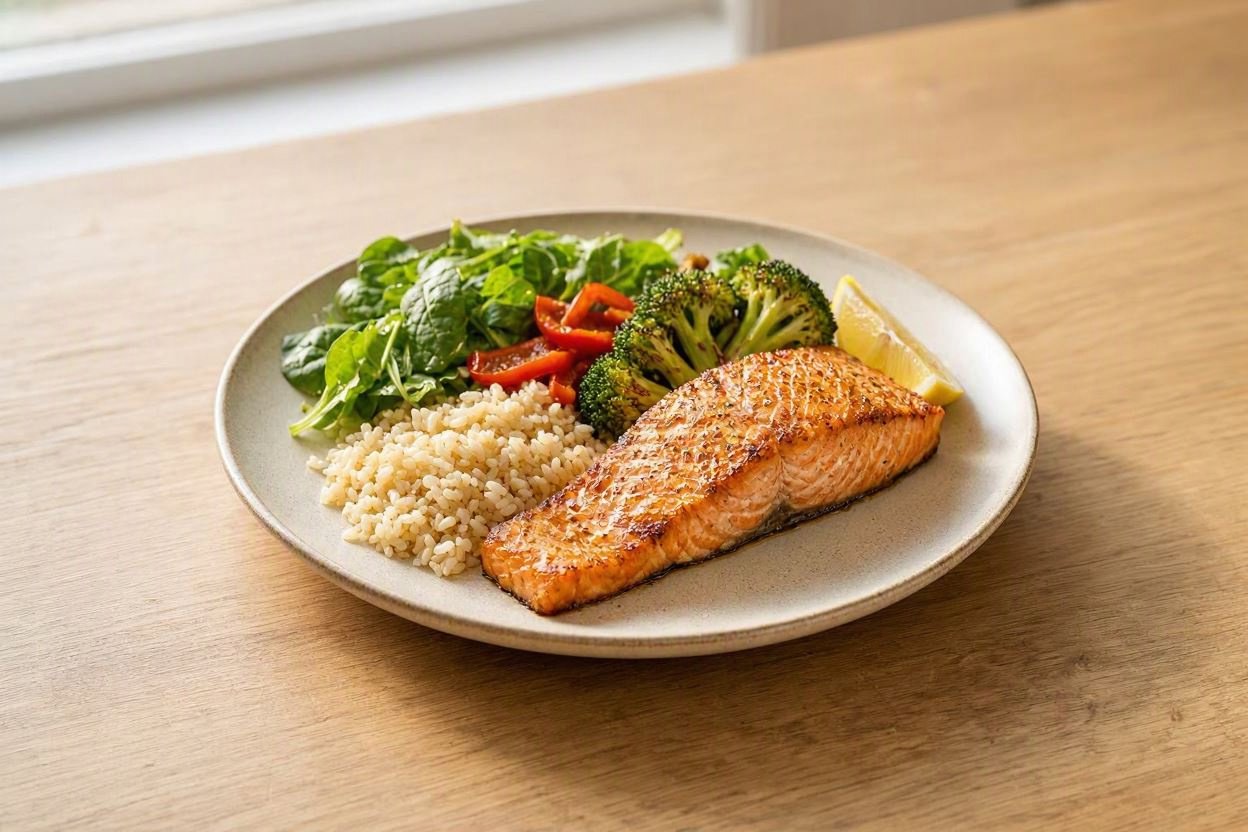
- Grilled chicken breast (4–5 oz / 120–150 g) with quinoa or brown rice (½ cup cooked) and roasted vegetables (broccoli, peppers, zucchini). Dressing: olive oil, lemon juice, salt and pepper.
- Or a big salad: mixed leafy greens, chickpeas, avocado (¼), cucumber and grilled salmon.
Afternoon snack
Carrot sticks or a hard-boiled egg, plus a few whole-grain crackers.
Dinner
- Baked turkey or tofu (4–5 oz / 120–150 g) with mashed sweet potato (½ cup) and steamed green beans.
- Or lean beef or shrimp with mixed vegetables (snow peas, carrots, mushrooms) cooked in a teaspoon of sesame oil, served with cauliflower “rice.”
Evening (only if I felt hungry)
Herbal tea with one small square (not a whole bar) of dark chocolate (85% cocoa), or cottage cheese with cinnamon.
My key rules
- No liquid calories. I cut out soda, juice and sweet milky coffees, and I stopped eating fresh bread. The only bread I kept was one slice of whole-grain toast.
- Limited processed food, with a focus on whole, single-ingredient foods.
- One “flexible” meal a week (for example pizza — never a whole one, only three quarters of it, or a small one I ordered — or pasta) to keep my mind in balance.
This is what worked for me, not a meal plan or medical advice. The foods and portions that suit you depend on your health, medications and goals. If you have a heart or blood sugar condition, talk to your doctor or a registered dietitian first. For a general starting point, see our 7-day healthy diet plan.
How I Started Moving
For the first eight months, I didn’t set foot in a gym. I exercised lightly at home, just 10 to 15 minutes a day. Later, I went back to the gym from time to time. Today I walk most mornings, rain or shine, and I run twice a week with Megan.

Almost Two Years Later
It wasn’t a straight line. After that doorbell moment, the first eight months brought the biggest change, about 44 lbs (20 kg). The last 22 lbs (10 kg) came off more slowly, and it took me almost two years in total to reach the 146 lbs (66 kg) I weigh today, 66 lbs (30 kg) less than at my heaviest. My life completely transformed. I reached a weight that felt healthier and more manageable for me. I felt more energetic and more capable of keeping up with daily life. My allergies still exist but appear mostly during spring — when nature personally attacks my sinuses.
Most importantly, I now have real energy. The kind that makes leaving the house feel exciting instead of exhausting. I even signed up for a women’s mini-marathon. Running. Me. Years ago, I would have laughed while eating chips on the couch.

Following a sustainable approach helped me rebuild my confidence, health, and happiness.
My journey taught me that real transformation happens through sustainable habits, patience, and proper support. And thankfully… without needing to start a professional sumo career.
— Michelle Pruitt
Results are one person’s experience and are not typical or guaranteed.
What the People Around Michelle Say
Before we started going to the gym, Michelle was a cheerful person, chubby like me. What bothered her most was the teasing from other kids. She was more determined than I was, but when things didn’t go to plan, she fell apart.
When I visited her after the heart attack, she seemed ashamed, almost as if she was apologizing for everything that had happened, and as if she needed help but didn’t know how to ask. She didn’t look like the Michelle I know. Her face was gray, she was exhausted, and she seemed afraid of everything.
Eight months later, the first thing I noticed was the way she walked. She literally walked differently, like someone with a plan. And after two years? Michelle is the person who suggests a walk instead of coffee. The craziest part is that for the first time in her life she actually eats slowly and enjoys her food, instead of eating as if she’s apologizing.
After her heart attack, we became best friends again. Twice a week we run around the neighborhood.
— Megan, Michelle’s friend since high school
I remember her first day like it was yesterday. She came in with a friend for her first workout, and I asked her to get medical clearance before beginning exercise. The next time she showed up with it in her hand, an actual piece of paper, and said, “I have no idea what I’m doing, but my doctor and my friend say I have to. I can’t get hurt.”
For the first two weeks, we only did 10 to 15 minutes of treadmill walking and light bodyweight exercises, sitting down. A few months later she stopped coming, while her friend carried on alone. Years later she started coming back from time to time, and I could see she had changed a lot, in attitude and in build. To this day, when we run into each other, we say hello and chat for a minute.
— Jessica, personal trainer at Planet Fitness
Michelle has been my neighbor since we moved in, so I’ve seen it all. And today? What a transformation. She’s not the same person. In the morning I see her coming back from a walk, rain or shine, and she waves.
Now we go to the market together on Sundays. She knows which fruit to pick, reads the labels, and cooks. Recently the whole neighborhood went on a 5K walk, and Michelle organized it.
— Monica, Michelle’s neighbor
What the Research Says About Michelle’s Approach
Michelle lost about 44 lbs (20 kg) in the first eight months, roughly 1.3 lbs (0.6 kg) a week, which falls within the gradual pace of about 1 to 2 pounds (0.5 to 1 kg) per week often discussed by organizations such as the Mayo Clinic. The remaining 22 lbs (10 kg) came off more slowly. The American Heart Association notes that even a 5% to 10% weight loss can make a difference to heart health. For background, see the Cleveland Clinic’s metabolism overview and the NIDDK’s guidance on blood sugar.
Frequently Asked Questions About Michelle’s Story
How much weight did Michelle lose?
About 66 lbs (30 kg), from 212 lbs (96 kg) at age 20 to 146 lbs (66 kg), at a height of 5’9″ (175 cm).
How long did it take?
About 44 lbs (20 kg) came off in the first eight months, and the last 22 lbs (10 kg) took longer, almost two years in total. Timelines differ from person to person.
How hard is it to lose 60 pounds?
For Michelle, the hardest part wasn’t any single rule. It was staying consistent after years of yo-yo dieting. Everyone’s body and timeline are different, so talk to your doctor before starting.
Why is it so hard to stick to a diet?
In Michelle’s case, it was strict diets she couldn’t keep up, comparing her progress with a friend’s, and losing motivation when she had no support. What finally worked was a routine she could repeat: balanced meals, water, sleep, Sunday meal prep, light exercise and a weekly check-in with a support group. When motivation dips, these 35 realistic motivational phrases for weight loss can help.
What did Michelle change in her daily routine?
She stopped weighing herself daily, slept 7–8 hours, drank 2–3 liters of water, prepped meals on Sundays, cut liquid calories, ate mostly whole foods, allowed one flexible meal a week and added light daily exercise.
About This Story
Story shared by Michelle Pruitt with Trudy Banks. Nutrition information reviewed by Chloe MacAllister, Certified Sports Nutritionist (Future Fit Training, Level 4, 2020). Last reviewed: October 1, 2026.
Health Disclaimer
This article is based on personal experience and general wellness information. It does not provide medical diagnosis or treatment. Always consult a licensed healthcare provider before making changes to your diet, supplements, or weight loss routine.