
Losing Motivation to Lose Weight? 7 Ways to Get Back on Track
Losing motivation to lose weight is common, especially when early excitement fades, the scale stops moving, life gets busy, or a plan starts feeling too restrictive. A difficult week does not erase your progress or mean you have failed. Often, the most useful next step is not trying harder — it is making your routine simpler, more realistic, and easier to return to.
This guide shares practical ways to reset after a setback, rebuild momentum, and create habits that still work on ordinary low-motivation days. It is not about perfection, punishment, or chasing a dramatic short-term result. It is about choosing a next step you can genuinely repeat.
Why You May Be Losing Motivation to Lose Weight
Motivation naturally changes over time. At the beginning of a new routine, novelty and hope can make healthy choices feel easy. Later, real life takes over: work becomes demanding, meals are less predictable, sleep is off, social events happen, or a small plateau makes your effort feel invisible.
Motivation is helpful, but it is not a reliable daily fuel source. Sustainable progress usually comes from routines that can continue when motivation is low, not only when you feel focused and energized.
- Expecting the scale to move in a straight line every week
- Following rules that are too strict to keep up with daily life
- Measuring success only by body weight or clothing size
- Trying to change food, exercise, sleep, and social habits all at once
- Seeing one missed workout or unplanned meal as proof that the plan is over
- Using guilt instead of a realistic plan for stressful days
None of these patterns makes someone lazy or incapable. They are signs that the plan may need adjusting. A routine should support your life, not require you to pause your life to follow it.
What to Do When You Are Losing Motivation to Lose Weight
When you are losing motivation to lose weight, avoid responding with a harsher plan. Skipping meals, adding punishing workouts, or trying to “make up for” food can make the next few days even harder. Instead, pause and identify the smallest useful action you can do today.
For example, you do not need to rebuild your entire routine after a busy weekend. You might simply plan one balanced dinner, take a ten-minute walk, refill your water bottle, or prepare tomorrow’s breakfast. A restart can be small and still count.

7 Ways to Get Back on Track
1. Stop Calling a Setback a Failure
One restaurant meal, a missed gym session, a holiday, or a week when you ordered more takeout does not cancel the choices you made before it. It is simply a deviation from your routine. The quicker you return to one familiar habit, the less power that setback has.
Try replacing “I ruined everything” with a more useful question:
What is one normal, supportive thing I can do at my next meal or in the next hour?
This could mean eating a regular lunch instead of skipping it, adding a fruit or vegetable to dinner, taking a short walk, or going to bed at a reasonable time. A calm reset is usually more sustainable than an aggressive correction.
2. Make the Next Goal Smaller
Large goals can be meaningful, but they are not always useful on a hard day. When motivation drops, make the next action small enough that it feels almost too easy to avoid. Instead of “work out for an hour every day,” start with “walk for ten minutes after lunch three days this week.”
Specific, realistic goals make it easier to see progress and adjust your plan. Public-health guidance commonly encourages people to focus on practical behavior changes they can repeat rather than relying on vague intentions alone.
| When the original goal feels too hard | Try this smaller restart instead |
|---|---|
| Exercise six days every week | Take a 10–15 minute walk on three days this week |
| Cook every meal from scratch | Plan one simple dinner and one easy breakfast |
| Never eat dessert | Enjoy dessert deliberately and return to your usual next meal |
| Track every detail perfectly | Track one habit, such as vegetables at dinner or daily steps |
| Lose a certain amount by a deadline | Practice one repeatable habit for the next seven days |
The goal is not to lower your standards forever. It is to create enough momentum to make your next decision easier.
3. Build a Routine for Low-Motivation Days
A good routine should work on a busy Tuesday, not only on the day you have extra time, energy, and perfect meal prep. Think of your “low-motivation routine” as the simplest version of your plan — not the ideal version.
Examples of a low-motivation routine include:
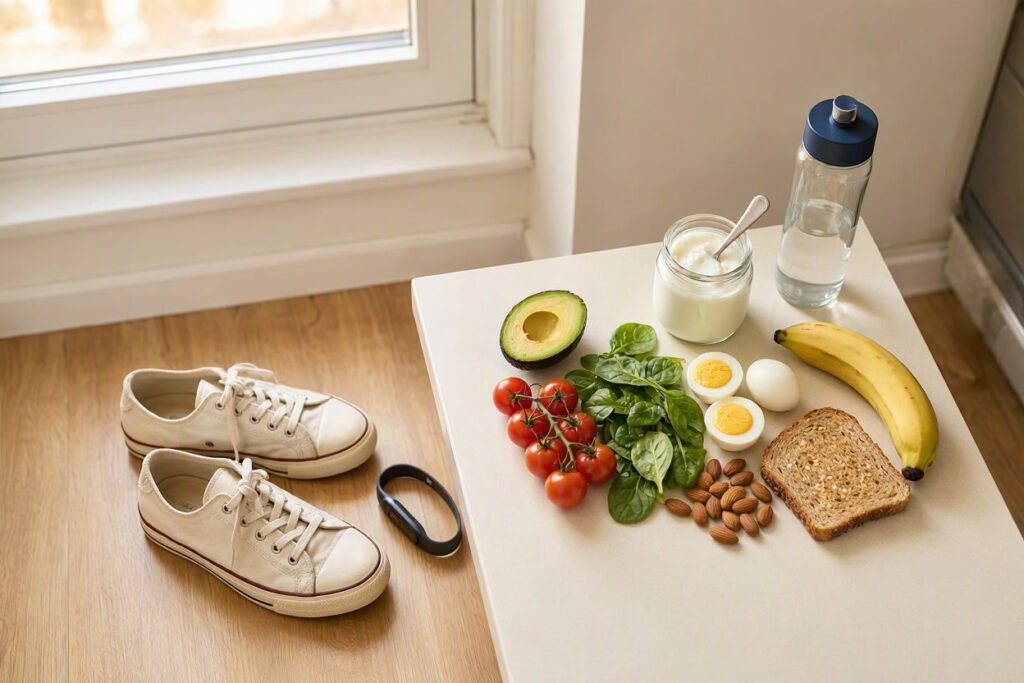
- Keeping a few easy protein, fruit, vegetable, and whole-grain options at home
- Choosing a short walk, gentle stretch, or active errand instead of skipping movement entirely
- Using a basic grocery list instead of trying a brand-new complicated meal plan
- Putting walking shoes or workout clothes where you can see them
- Deciding tomorrow’s breakfast or lunch before the day gets busy
- Keeping a refillable water bottle nearby during work or errands
Consistency does not require intensity. A short walk is still movement. A quick meal with familiar ingredients can still be nourishing. A low-effort day can still support a longer-term routine.
4. Track More Than the Scale
Scale weight can shift from day to day for many reasons, including hydration, meal timing, sodium intake, digestion, hormones, and clothing. If weight is the only thing you track, a normal fluctuation can feel like a verdict on all your effort.
Try tracking actions and experiences that show whether your routine is becoming more workable:
- How many meals you ate without rushing
- How often you included fiber-rich foods, fruit, vegetables, or protein
- Minutes spent walking, stretching, or doing an activity you enjoy
- Sleep consistency and energy through the day
- Whether your plan felt manageable rather than exhausting
- How you responded after a difficult day
These markers do not replace medical guidance or individual health assessment. They can, however, help you recognize that progress includes building skills, not only seeing a number change.
5. Find What Is Making the Plan Too Hard
If you keep losing motivation to lose weight, the problem may not be motivation itself. Your routine may be asking too much of you. Review the plan honestly and look for friction.
Ask yourself:
- Am I trying to change too many habits at the same time?
- Am I leaving myself hungry, tired, or overly restricted?
- Do I have realistic options for travel, workdays, social plans, and low-energy evenings?
- Is my exercise routine something I genuinely dislike or cannot fit into my schedule?
- Am I comparing my timeline to someone else’s?
- Would one small adjustment make the routine easier to repeat?
For example, if evening workouts repeatedly do not happen, moving them to lunch breaks or weekends may be more effective than telling yourself to be more disciplined. A plan should be adapted to reality, not defended at all costs.
6. Create Support and Accountability
Weight-related goals can feel private, but support often makes habits easier to maintain. Accountability does not have to mean posting every meal online or asking someone to monitor your body. It can be as simple as having one person who knows what habit you are working on.
- Ask a friend to join you for a weekly walk
- Plan a grocery trip or simple meal prep session with a family member
- Send a short check-in message to someone you trust
- Use a calendar to mark completed walks, meals, or bedtime routines
- Work with a qualified dietitian, clinician, trainer, or counselor when you want individualized support
Support works best when it feels encouraging rather than controlling. The right person helps you return to your routine after a difficult week instead of making you feel guilty about it.
7. Use Nonfood Rewards and a Restart Plan
Motivation can improve when you give yourself credit for the actions you control. Choose small nonfood rewards for keeping a habit, such as new music for walks, an episode of a favorite show, time with a book, a bath, flowers, or an inexpensive fitness accessory.
It also helps to write a simple restart plan before you need it. That way, a setback does not become a moment when you have to decide everything from scratch.
My restart plan: At my next meal, I will eat normally. Tomorrow, I will prepare one easy meal, move for ten minutes, and return to my usual bedtime.
This kind of plan removes the pressure to “start over perfectly on Monday.” You can restart at the next meal, the next walk, or the next night of sleep.

How to Keep Motivation for Losing Weight After a Setback
Learning how to keep motivation for losing weight is less about never slipping up and more about shortening the time between a setback and your next helpful choice. Instead of reviewing every decision you regret, look for the pattern that made the day hard.
Maybe you skipped breakfast and became overly hungry later. Maybe you scheduled a workout at a time that never works. Maybe you made a plan that did not leave room for social meals, travel, or stress. These are planning clues, not character flaws.
Use this three-step reset:
- Name what happened without judgment: “I had a stressful week and did not cook as planned.”
- Choose one adjustment: “I will keep two easy dinners in the freezer for busy evenings.”
- Take the next normal step: eat your next meal, drink water, take a walk, or prepare tomorrow’s food.
That process is more useful than trying to compensate for the past. Sustainable routines leave room for imperfect weeks.
Motivational Phrases for Weight Loss That Focus on Habits
Motivational phrases for weight loss can be helpful when they remind you to take a small next step, rather than pressure you to be perfect. Choose wording that feels supportive and realistic enough to believe.
- One steady choice is enough for today.
- A setback is information, not a verdict.
- I do not need a perfect week to continue.
- Small routines can create meaningful change over time.
- I can return to my next meal, not wait for Monday.
- My goal is a routine I can live with.
- Progress includes learning what works for me.
If a phrase feels overly dramatic or does not fit your experience, skip it. The most helpful reminder is one that makes your next action feel possible.
When to Get Professional Support
Self-guided habit changes can be useful, but not every challenge should be handled alone. Consider speaking with a qualified healthcare professional, registered dietitian, or mental-health professional if food, weight, or body image is causing persistent distress; if you feel stuck in cycles of severe restriction or overeating; or if you want an individualized plan that considers your health history, medications, activity limits, or other needs.
Professional support is not a sign that you lacked willpower. It can provide practical, personalized help and make a long-term plan feel safer and more manageable.
Frequently Asked Questions
Why am I losing motivation to lose weight?
Motivation can fade when a plan feels too strict, progress seems slow, life becomes stressful, or you measure success only by the scale. Rather than treating that as failure, try identifying one part of your routine that could become simpler and easier to repeat.
How do I get back on track after losing motivation to lose weight?
Start with one small action at your next meal or in the next hour. You might prepare a simple meal, take a short walk, refill your water bottle, or plan tomorrow’s breakfast. A small restart is more sustainable than trying to make up for a difficult week with an extreme plan.
How do I keep motivation for losing weight after a setback?
Treat a setback as information, not proof that you failed. Name what made the day difficult, choose one realistic adjustment, and return to your next normal meal or activity. Plans that allow for busy days and imperfect weeks are easier to maintain.
Are motivational phrases for weight loss actually helpful?
They can help if they encourage a practical next step instead of perfection. A useful phrase might remind you that one difficult day does not erase progress and that you can return to your routine at the next meal.
Should I see a professional if I keep losing motivation to lose weight?
Professional support can help if food, weight, or body image is causing persistent distress, if you are stuck in restrictive or overeating patterns, or if you want an individualized plan. A qualified healthcare professional or registered dietitian can help you choose a safer, more realistic approach.
Final Thoughts
Losing motivation to lose weight does not mean you need more pressure. It often means your plan needs a reset: smaller goals, simpler routines, more flexibility, and a kinder response to setbacks. Focus on the next helpful choice rather than trying to repair an entire week at once.
Motivation for weight loss may come and go, but habits can still carry you forward. Build a routine that works on your low-energy days as well as your highly motivated ones, and give yourself permission to restart as many times as you need.
Looking for more practical guides? Browse the Weight Loss category for more realistic nutrition and healthy-habit resources.
Sources:
- National Institute of Diabetes and Digestive and Kidney Diseases — Keep Active & Eat Healthy to Improve Well-being & Feel Great — practical guidance on starting with small activity goals, handling common roadblocks, and asking family or friends for support.
- National Institute of Diabetes and Digestive and Kidney Diseases — Healthy Eating & Physical Activity for Life — information on building and maintaining healthy eating, activity, sleep, and stress-management habits.
- Centers for Disease Control and Prevention — Steps for Losing Weight — guidance on setting a realistic plan that includes healthy eating, physical activity, stress management, and adequate sleep.
- Nutrition.gov — Strategies for Success — federal resources on realistic behavior changes, tracking habits, building support, and maintaining healthy routines over time.
Written by Chloe MacAllister, Certified Sports Nutritionist · Last updated September 2026